
IoT and LoRaWAN monitoring
Available according to scope
Data from remote locations without the need for daily physical checks.
SmartGovIOT helps obtain and display data from sensors and measurement locations in municipal buildings, technical facilities and outdoor environments. Depending on the specific need, this may concern level, temperature, humidity, consumption or the technical state of supported equipment.
We link a measurement to the location it concerns. Staff can therefore follow not only the latest value, but also its trend and when it was obtained. With suitable settings, they can receive an alert about a deviation or missing data.
The particular solution is designed according to the purpose of measurement, environmental conditions and communication options. You can start with one sensor or a selected location and define further scope based on the test results.
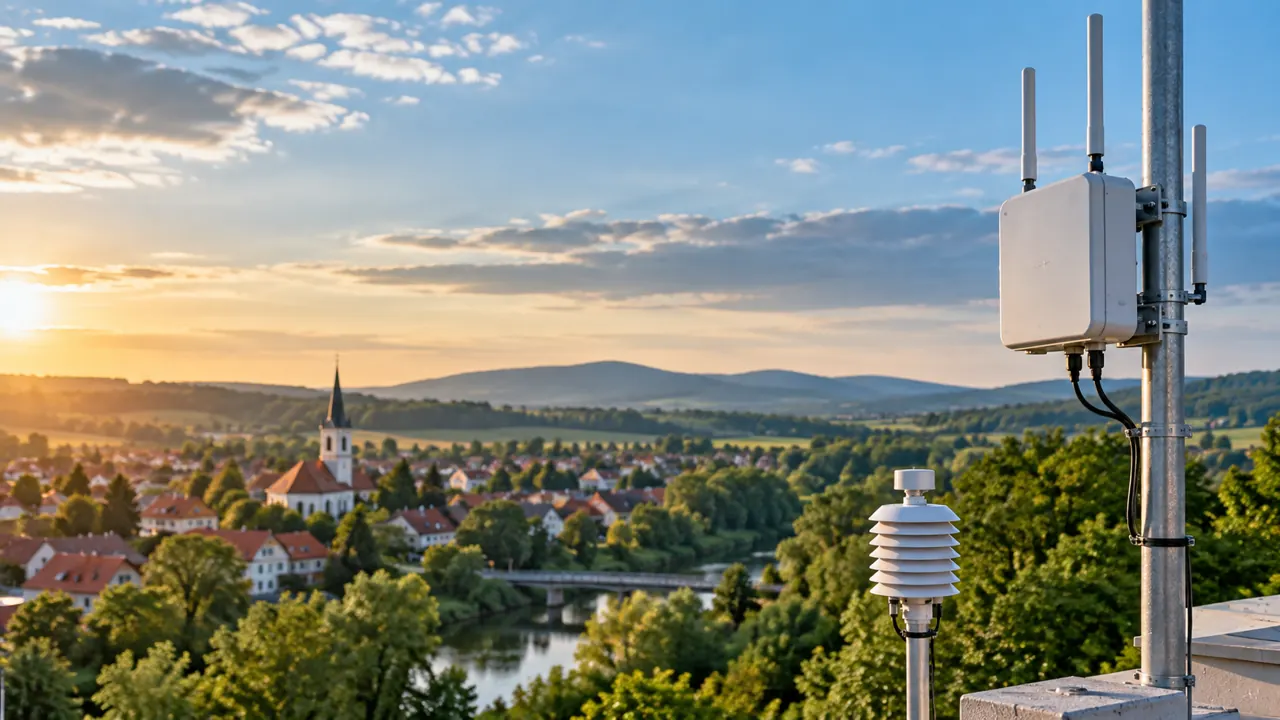
When a site visit shows only one moment in time
During an inspection, staff observe the condition at the time of the visit. They may not know what happened between visits, how long a deviation lasted or whether a problem recurs regularly.
Remote measurement can add to that picture. A temperature history can help investigate storage conditions, a level trend can help check a tank, and data from a supported meter can help track water consumption.
A sensor does not replace every activity carried out on site. It provides a specific value that needs to be evaluated correctly. Part of its value lies in helping determine when and where attention is needed.
What a municipality can monitor
Water and levels
The level in a tank, well or another suitable measurement location. Depending on the equipment used, further data can be added, such as flow or information about flooding in a technical space.
The design defines exactly what the sensor measures, where it will be positioned and what the value means for operations. Level monitoring alone is neither flood prediction nor confirmation that the location is safe.
Temperature, humidity and indoor conditions
Conditions in schools, warehouses, archives, plant rooms and other spaces where changes in the environment matter.
Measurement can help identify recurring fluctuations or investigate what happens outside operating hours. The variables monitored depend on the particular sensor; individual indicators are not presented as a complete assessment of conditions in a building.
Rainfall and outdoor conditions
Local data on rainfall, temperature, humidity or other supported variables. This can supplement the information needed to manage selected locations and technologies.
Suitable positioning and clear identification of the location to which the value relates are important. A local measurement does not automatically represent the municipality's entire territory or constitute a complete forecast of future conditions.
Consumption and remote meter readings
Data from supported electricity, water, gas or heat meters where a suitable reading method is available.
Before connection, we check the particular meter type, available interface and meaning of the values transmitted. Receiving a value from a device does not yet mean that it is correctly assigned to a site or ready for calculating consumption. The Energy and metering area builds on these relationships.
Equipment operating states
Supported fault contacts, detection of flooding or opening, or other permitted technical events. The specific scope is defined according to the device and intended use.
For an event, the meaning of the signal must be understandable. A contact changing state or a communication outage is not, by itself, a professional diagnosis of a fault's cause.
How LoRaWAN fits into the solution
The sensor obtains a value, the communication layer transmits it and the platform assigns it to the correct location.
In a LoRaWAN solution, a sensor sends measurements by radio. A receiving gateway forwards them to the system, where the data is processed and made available to authorised users.
For the municipality, the outcome matters: knowing where a measurement comes from, what it means and whether it is usable for the agreed purpose. We therefore address communication details in the technical design, rather than requiring ordinary users to understand them.
LoRaWAN is one transmission option. The technology's name alone does not confirm the suitability of every device or coverage at every location. The specific combination of sensor, installation and communication must be verified.
The last value may not represent the current state
The availability of the source must be monitored alongside the measurement.
If a sensor stops sending data, the last value received may remain unchanged. Without timing information, it could appear to confirm that nothing is happening at the location.
The design therefore defines the expected frequency of data and how outdated values are identified. For supported devices, battery status and communication information can also be monitored. The scope of this information depends on what the device actually provides.
Missing data needs to be distinguished from a zero value or a normal state. The time of measurement must also remain distinct from its later receipt where the source allows the two to be distinguished.
The aim is for staff to know when they can rely on the available measurement and when the sensor itself or data transmission needs to be checked.
An alert should have agreed next steps
For a measurement location, defining a threshold that generates a message is not enough. It is also necessary to agree who receives the alert, what staff should check and what to do when data is unavailable.
The configuration follows the purpose of measurement and site conditions. A brief environmental change, a prolonged deviation and a loss of communication have different significance.
Basic alerts and a broader workflow are not the same feature. Linking an event to a task, its acceptance and a recorded outcome is prepared according to the agreed pilot scope.
What this can look like in practice
Illustrative situation: monitoring the level in an operational tank
A municipality needs to know how the level in a tank changes between regular checks. A suitable measurement method, sensor position and communication availability are assessed first.
After connection, checks establish whether the received values correspond to the actual condition and correctly describe the measurement location. The data interval, display method and thresholds at which staff should be alerted to the need for a check are defined.
If a measurement crosses the agreed threshold, the designated staff member checks how current the value is and the situation on site. They decide on the next steps according to their findings. If task records are included in the scope, the inspection outcome is assigned to the relevant event.
Behaviour during a communication outage is verified separately. The absence of a new value must not give the impression that the level remains safely unchanged.
The example describes a proposed process with suitable measurement and an agreed feature scope. It is not a customer reference or a replacement for operational and safety procedures.
What we check before deployment
Measurement purpose and the detail required. We first establish which question the sensor should help answer and how often new data is needed. The equipment proposal and evaluation method follow from this.
Site conditions and installation. We assess the environment, suitable positioning, device protection and access for inspection or service. The sensor must measure the required variable in the right place, not merely where it is easiest to attach.
Communication and power supply. We verify transmission at the planned installation point and the power supply method. For battery-powered devices, we assess expected battery life according to the specific settings and conditions, not as a universal promise.
Maintenance and responsibility. We agree on the necessary inspections, any cleaning, measurement checks and battery replacement according to the device type. This also includes defining who will handle a reported deviation or outage.
From the first measurement to further expansion
The initial scope may include one location, a history of values and a specific alert. Testing examines not only whether messages arrive, but also whether the data is understandable and usable for the intended purpose.
The result should answer practical questions: Is the measurement suitable? Does communication work under the site's conditions? Can we recognise an outage? Does the staff member know what to do after an alert?
Only then does it make sense to decide on additional sensors. The presence of one gateway or a working measurement does not automatically confirm coverage throughout the municipality or the readiness of every other device type.
Availability of individual capabilities
Available according to the specific scope: connection of supported sensors, receipt and storage of data, history, a basic display and alerts. Battery and communication monitoring depend on the device's capabilities and the verified integration.
Pilot solution: specific environmental measurements, shared monitoring of a larger sensor network and linking measurements with sites, events, tasks and responsibility.
In development: flood prediction, AI evaluation, predictive assessment of technical condition and advanced automation.
Availability labels always apply to a specific combination of equipment, features and deployment conditions.
Monitoring is not automatic control
Displaying a level does not grant permission to start a pump. Temperature information does not automatically mean the ability to change heating. Any remote control has its own design, approval and verification conditions.
Equally, measurement and threshold alerts do not replace official warning systems or professional assessment. For important operational situations, an inspection process and a responsible person must remain defined.
Do you need measurements from a remote location?
Tell us what you need to monitor, the conditions at the location and the problem the measurement should help address. Information about the required frequency of data and existing equipment is also useful.
You do not need to know the right sensor or communication method at the outset. We will analyse the request and propose the necessary technical checks, measurement method and a suitable initial scope.
Alternative contact: info@smartgov.sk
Related solutions: Energy and metering · Asset and operations management · Security and events