
Energy and metering
Available according to scope
Energy and water consumption in the context needed for decisions.
SmartGovIOT helps municipalities connect electricity, gas, water and heat consumption data with specific sites and metering points. Within the available data, it makes it possible to follow trends, compare periods and identify deviations that require attention.
The aim is not merely to display another chart. It is important to know what a value represents, where it comes from, which period it covers and how it relates to building operations. Such an overview can support daily checks and the preparation of information for maintenance, technology renewal and expenditure planning.
The specific scope is prepared according to available meters, existing systems and the quality of input information. You can start with one site or a group of metering points.
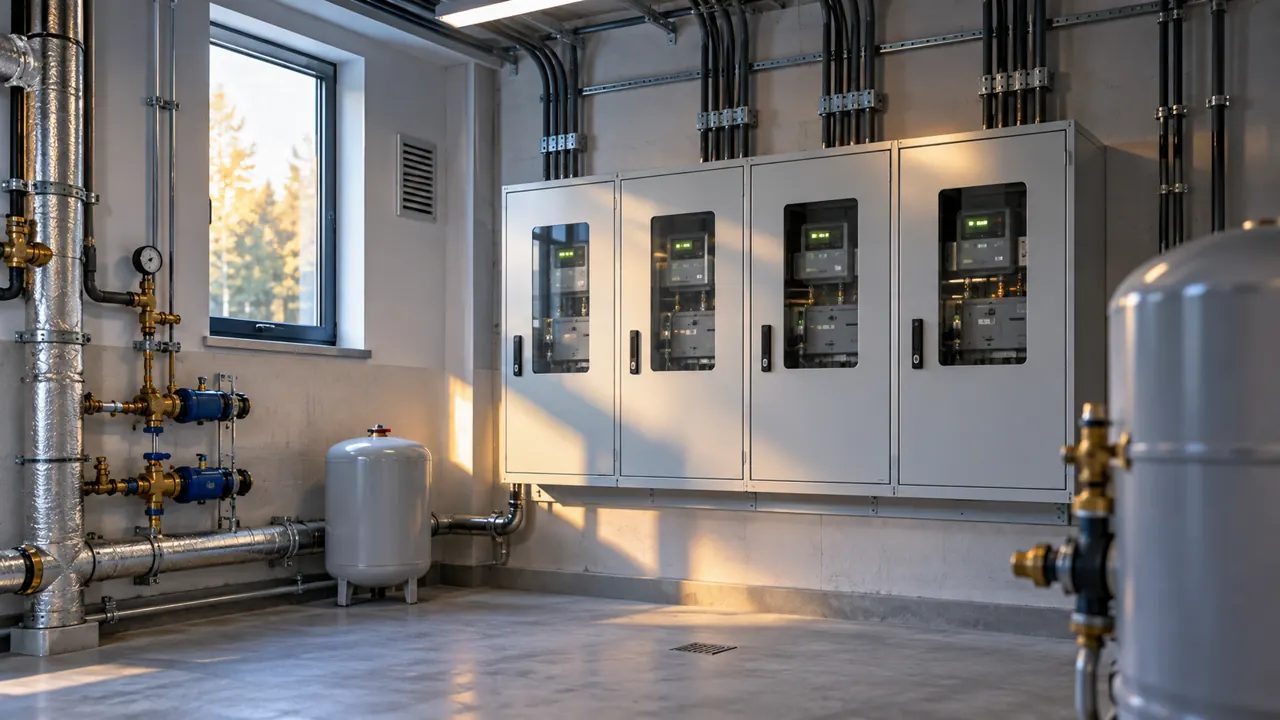
When the final bill does not explain the whole pattern
Invoices, regular meter readings, supplier portals and local measurements provide different views of consumption. When they remain separate, it can be difficult to establish which site a value belongs to, whether the periods are comparable and when an unusual trend began.
A shared energy overview should make these relationships accessible. Depending on the detail available, it can show a long-term trend, a difference between periods or consumption outside normal operating hours.
Not every question can be answered from every source, however. A monthly reading provides a different level of information from regular interval measurement. When designing the solution, we therefore first establish what you need to find out and whether suitable information is available.
What a municipality can monitor
Electricity
Consumption at individual sites and metering points, its change over time and, depending on the source available, the pattern of energy use or power demand. More detailed measurements can support checks of differences between operating and non-operating hours or the search for recurring deviations.
The meaning of each metering point must be clear. A building's main meter and a submeter for part of that building cannot simply be added together, because some consumption could be counted twice.
Gas and heat
Gas or supplied-heat consumption, its trend during the heating season and differences between comparable periods. Evaluation needs to consider what the energy is used for and whether operating conditions have changed.
Higher consumption does not, on its own, necessarily mean an incorrect setting or a fault. Weather, building occupancy, operating hours and changes made also matter.
Water
Water consumption at sites and selected supply points. Sufficiently detailed data can help detect continuous consumption outside normal use or another deviation requiring investigation.
An alert prompts a check; it does not automatically confirm a leak. The responsible staff member must assess the cause in light of the actual situation and measurement quality.
On-site generation and storage
With a supported integration, data on photovoltaic generation, available information about energy use and the basic status of battery storage can be added.
The scope depends on the specific equipment and data made available. Displaying generation or battery status does not automatically mean that the device can be controlled or its operation optimised.
Costs and billing information
Within the agreed scope, consumption can be linked to price and billing data. This comparison helps distinguish a change in the quantity of energy consumed from a change in price or another component of the bill.
Estimated costs must remain distinguishable from amounts actually billed. A working calculation based on entered prices should not be presented as a substitute for an invoice.
Related operational data
Building temperature, operating hours or the status of supported equipment can help explain consumption. They are added where available and relevant to the specific question.
The aim is not to collect everything, but to connect data that helps explain the operation of the site concerned.
The meaning of every data item should be clear
A value without a source, time and unit can lead to an incorrect conclusion.
When preparing energy records, we therefore distinguish a meter reading, consumption over a period, an instantaneous value and a value taken from billing. We also preserve the distinction between automatic measurements, manual readings, imported records and calculated values.
A gap in data does not mean zero consumption. The last measurement received may not describe the current state. Evaluation must also take account of meter replacement, changes to its assignment or correction of an erroneous record.
The role of the records is to preserve these circumstances, not hide them behind an apparently continuous chart. If the source information is incomplete or uncertain, it must be clear which conclusions can be drawn from it and which cannot yet be drawn.
Compare in a way that makes the result meaningful
The same number may not mean the same thing in two buildings.
A school, a sports hall and an office building are used differently. Even at one site, operating hours, the number of users or the extent of heated space may change.
Comparison therefore requires more than ranking buildings by total consumption. Its purpose, the length of the period, data availability and known operational changes need to be considered. This assessment also matters when evaluating a repair or an energy measure.
SmartGovIOT is intended to provide information for this work. It does not mean that the system automatically knows every circumstance or that every deviation represents waste.
What this can look like in practice
Illustrative situation: unusual night-time water consumption in a municipal building
Sufficiently detailed water consumption data is available at a selected site. Consumption is repeatedly recorded even during hours when the building is normally closed.
With the agreed alert configuration, the responsible staff member receives a prompt to investigate. They first check whether the data is current and whether any exceptional activity took place in the building. They then arrange an on-site check of the possible cause.
If a fault is confirmed and repaired, the time and outcome of the intervention are recorded. Subsequent measurements help assess whether the unusual consumption has stopped and whether further investigation is needed.
The benefit is connecting measurement with a specific process: detect a deviation, verify its cause, take the necessary action and evaluate the outcome.
The example describes an illustrative process with suitable measurement and an agreed feature scope. It is not a statement of any particular saving achieved or a customer reference.
Local measurements and authorised data sources
Local operational measurement, a historical manual reading and data from an authorised data channel may differ in purpose, detail and the time at which they become available. Their source and meaning must therefore be preserved when they are connected.
Connections to authorised interval data, including OKTE/EDC are part of the planned and pilot scope. They require the appropriate permissions, fulfilment of technical conditions and verification of the particular connection.
We will not present such a connection as an available part of the offering until it has actually been verified for the scope concerned. Working with historical information does not, by itself, mean that automated access to new data is operational.
What an initial scope can look like
Selected metering points, verified assignment and a clear question to evaluate.
You can start with one building or a group of sites where usable readings or supported measurement already exist. The identity of the metering points, their links to sites, units and the available period are checked first.
The agreed overview is then prepared, and missing or disputed data is identified. Where possible, regular collection, an import or an alert for a specific deviation is added.
The first step may produce a usable metering-point register, a processed history and an answer to an agreed question: How is consumption changing? Where is data missing? Which pattern needs investigation? What needs to be added to allow a more detailed comparison?
Buying new equipment need not be the first step. We first assess what can be established from existing information.
Availability of individual capabilities
Available according to the specific scope: metering-point records, supported local measurements, individually verified integrations, basic charts, history, overviews and alerts. Data on on-site generation or storage depends on the supported equipment and integration.
Pilot solution: shared energy management across several sites, linking consumption and costs, extended comparisons and regular energy overviews. Authorised interval sources are included only according to the status of their specific verification.
In development: AI assistance for explaining data, advanced predictions and automated optimisation processes. Remote control is not an automatic part of monitoring.
Information for decisions, not a promise of automatic savings
SmartGovIOT helps organise data, identify questions for investigation and follow the outcome of measures taken. Introducing records or measurement alone, however, does not guarantee lower consumption.
The outcome depends on the quality of the information, correct assessment and subsequent action. Decisions about repairs, setting changes or investments remain with authorised staff and the relevant specialists.
Would you like a better overview of municipal consumption?
Tell us which sites and types of energy you need to monitor, which meters or systems you use and what data is currently available. A specific question you want to answer is also helpful.
We will analyse the request and propose a suitable first step—from organising existing meter readings to verifying supported measurement and preparing a regular overview.
Alternative contact: info@smartgov.sk
Related solutions: Asset and operations management · IoT and environmental monitoring · Public lighting